The communication and dissemination activities aim to maximize the visibility, impact, and accessibility of OneArchSci’s research and outcomes. They focus on sharing results through high-impact scientific publications, conferences, and seminars; engaging the Cypriot and wider BEMME research communities; fostering collaboration with governmental, NGO, and SME stakeholders; and raising public awareness through outreach initiatives, digital platforms, and events.
5 February 2026
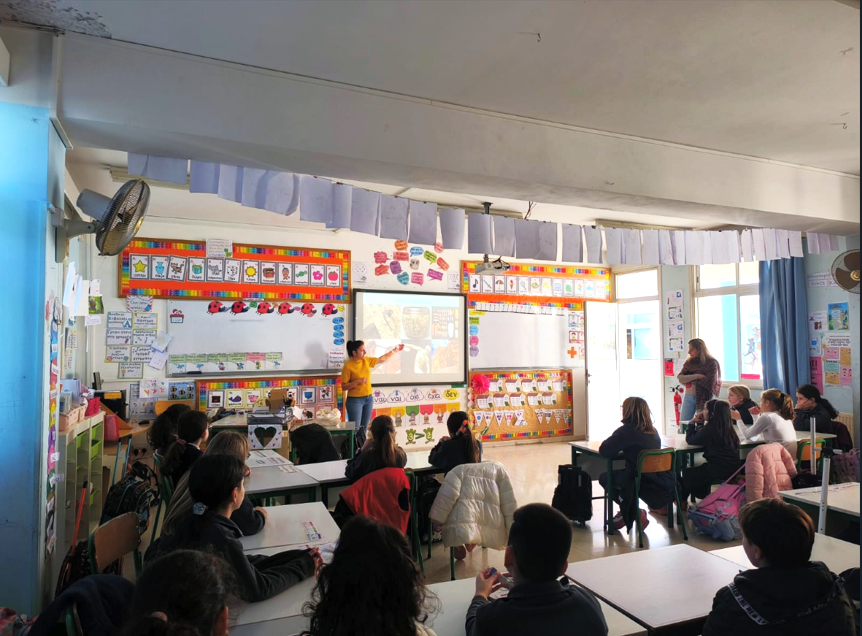
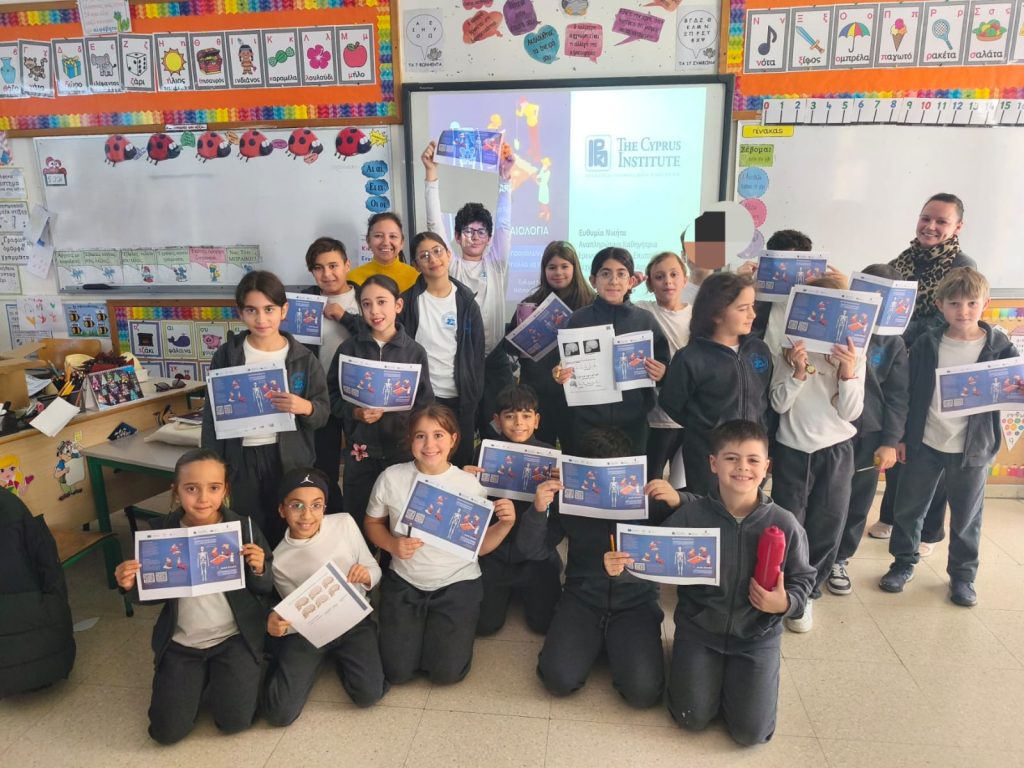
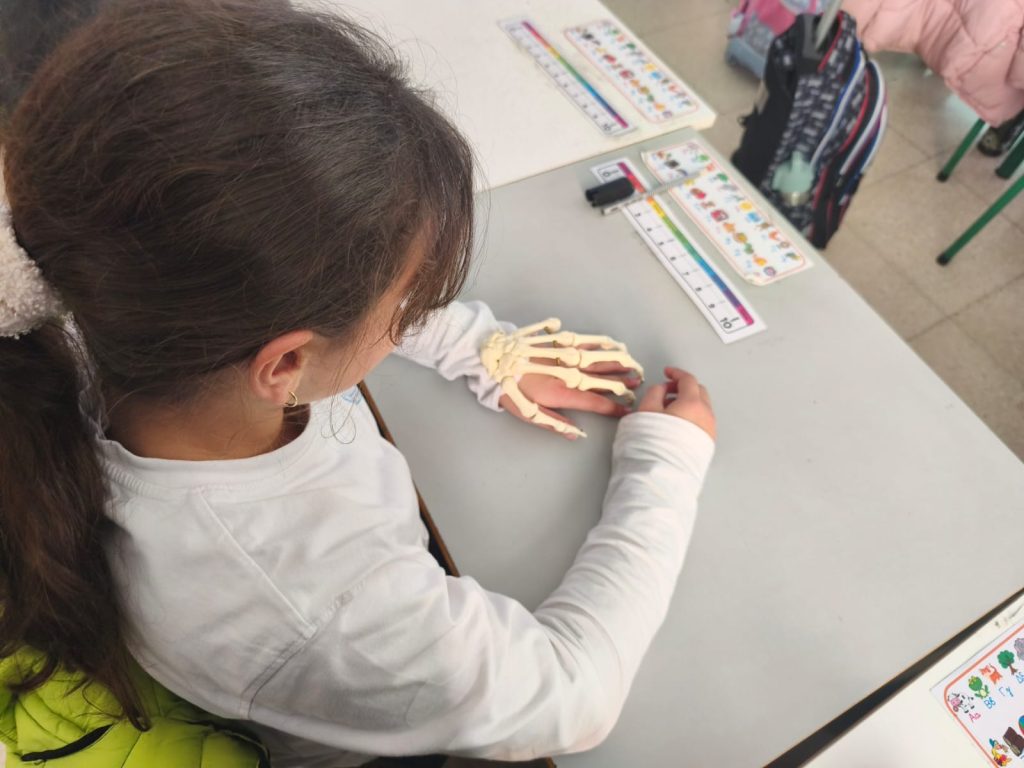
Outreach activity at the Primary School of Agios Demetrios, Strovolos
A journey into the world of osteoarchaeology!
Gkampriella Selempa (PhD student), Dr. Efi Nikita (Associate Professor) and Dr. Angelos Hadjikoumis (Post-Doctoral Research Fellow) introduced students aged 10-12 years to osteoarchaeology. Through a journey into the world of osteoarchaeology, children discovered how scientists read the “traces” that everyday life leaves on the skeleton in order to learn how people lived in the past: what they ate, how physically active they were, the diseases they suffered from, and how easy or difficult their lives were in general. Using simple examples from Cyprus and other regions, along with participatory activities, young visitors became detectives of the past!
The Science of the Past in Verse: A Rhyming Poem About Archaeological Science
More than digging!
9th HSA symposium of Archaeometry, Patra, Greece
Materializing the past:
Narratives via Archaeological Science
Theoni Panagiotopoulou (PhD candidate in archaeometry and bioarchaeology) at the Cyprus Institute, participated in the 9th HSA Symposium of Archaeometry. The symposium was organized by the Institute of Chemical Engineering Sciences (FORTH/ICE-HT) and in collaboration with the Hellenic Society for Archaeometry and the Ceramics Research Group of the Department of Geology at the University of Patras.
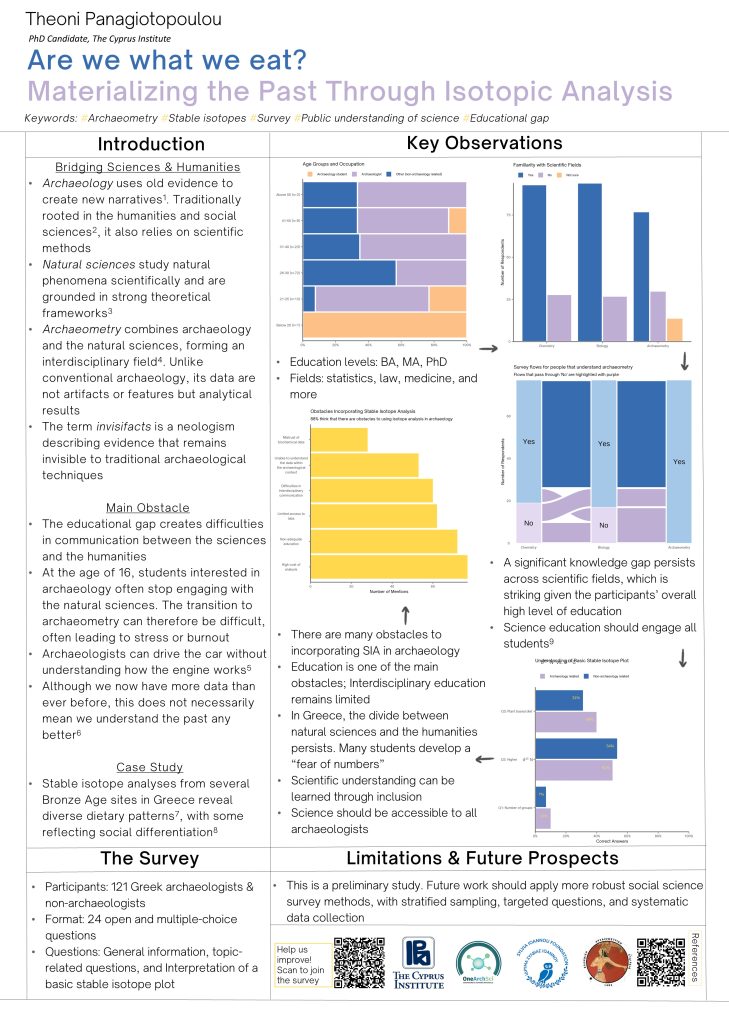
Are we what we eat? Materializing the Past Through Isotopic Analysis
Theoni Panagiotopoulou (Supervisor: Dr. Efi Nikita) presented a poster examining how stable isotope analysis can help archaeology move beyond traditional theoretical frameworks that often limit the full integration of archaeological sciences.
By focusing on the biological principle that human tissues reflect dietary and environmental inputs, the presentation demonstrated how isotopic signatures can be used to reconstruct past diets, mobility, social identity, and status.Using published isotope data from Bronze Age Crete as a case study, Theoni showed how scientific evidence can challenge long-standing narratives in Minoan archaeology, particularly regarding social status and mobility.
She also presented survey data highlighting gaps in understanding and familiarity with isotopic methods among both archaeologists and non-archaeologists, emphasizing that recognizing and addressing these gaps is essential for a more holistic and scientifically grounded interpretation of the past.
26 September 2026
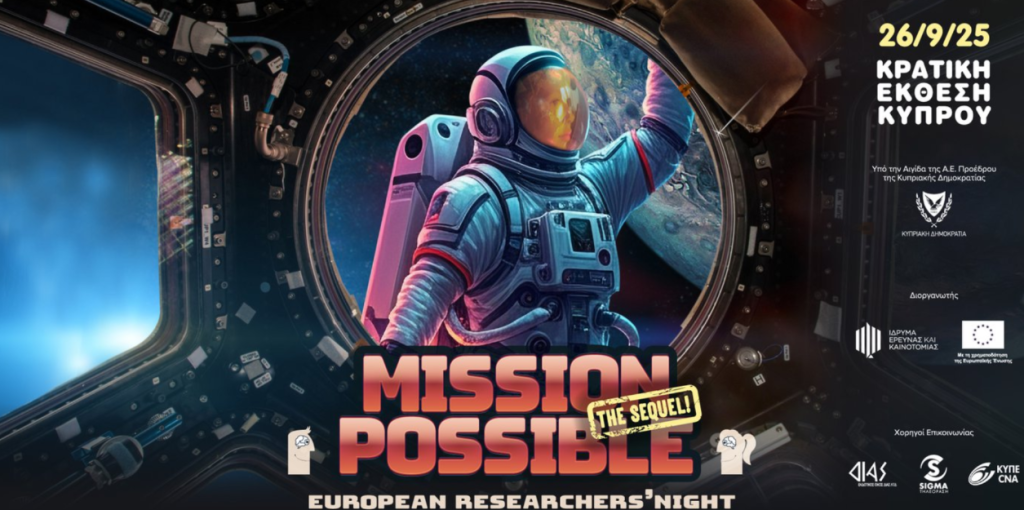
European Researchers’ Night 2025: MISSION POSSIBLE – The Sequel!
The European Researchers’ Night took place on Friday, 26 September 2025, under the title MISSION POSSIBLE – The Sequel!, at the Cyprus State Fair (Halls A & B) in Nicosia.
Organised by the Research and Innovation Foundation (RIF) since 2006, this flagship event brought research and innovation closer to society, offering visitors of all ages the opportunity to meet researchers, scientists, academics, and innovative entrepreneurs through an engaging evening of science and creativity.
This year’s programme was centred on the five EU Missions, addressing key societal challenges:
- Adaptation to Climate Change
- Cancer
- Healthy Oceans, Seas, and Waters
- Climate-Neutral and Smart Cities
- Soil Health and Sustainable Food
More information and the full programme are available at www.erncyprus.com.
In addition to the main event, European Researchers’ Night 2025 was complemented by a series of activities taking place throughout the year, targeting students, educators, researchers, and innovative entrepreneurs.
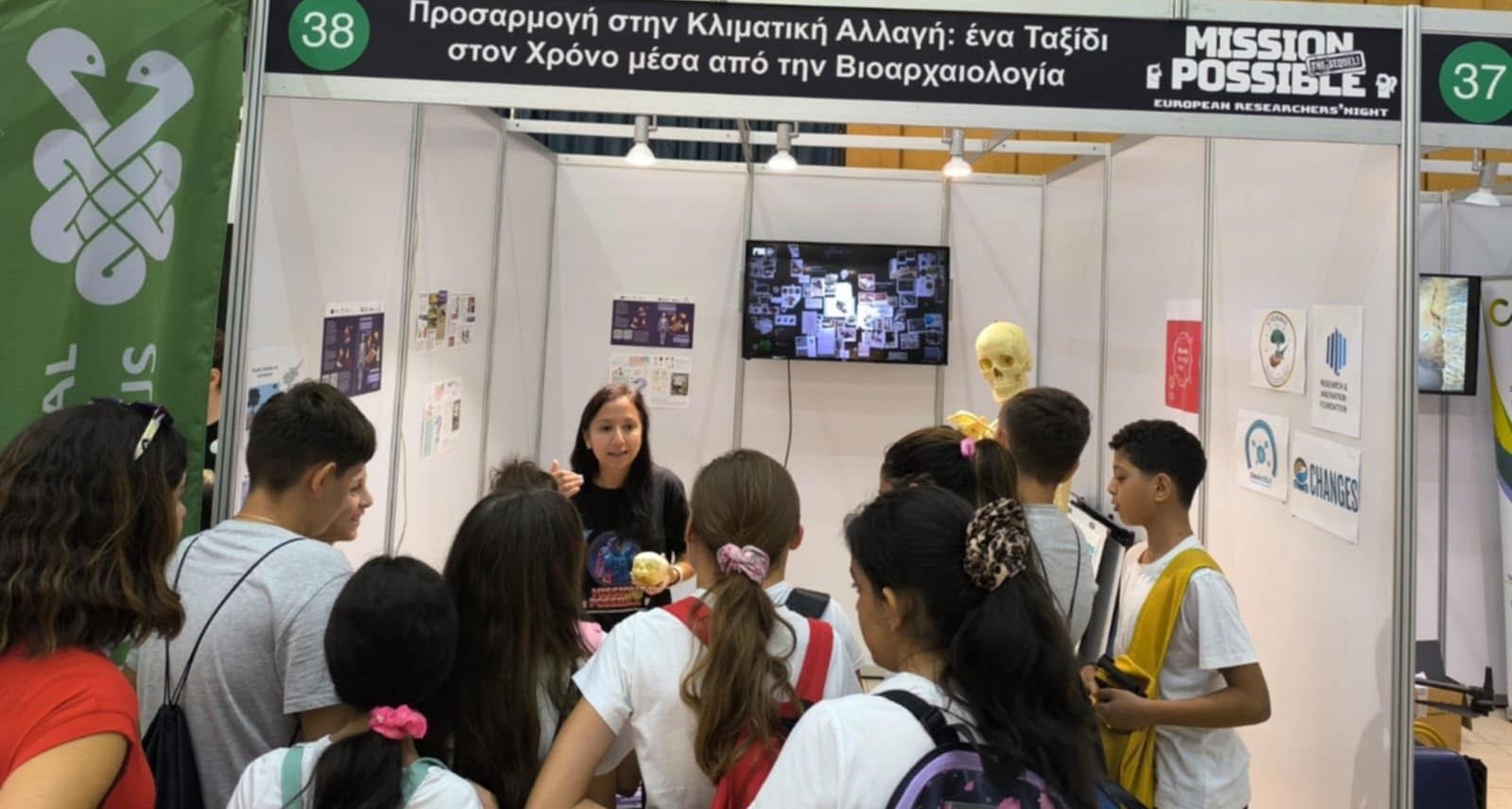
Understanding Human Adaptation to Climate Change: A Journey Through Time via Bioarchaeology
Dr. Efi Nikita and Gkampriella Selempa, shared insights about the people buried at Middle Bronze Age Linou—who they were, how they lived, and the burial traditions they followed. In the next few months, the OneArchSci project will study their bones using isotopic techniques, which can reveal what these individuals ate and how far they traveled during their lives.
05 September 2025
Byzantio Explained: Ep.22 featuring Dr. Nikita, Associate Professor of Bioarchaeology at the Cyprus Institute
The discussion focused on human mobility and other aspects of life in Byzantine times, with a case study from Nicosia.
Using bioarchaeological evidence and isotopic analysis, Dr. Nikita highlights how bioarchaeology may shed light on patterns of population movement, cultural interaction, and social dynamics in the Eastern Mediterranean.
Watch or listen here: YouTube Podcast
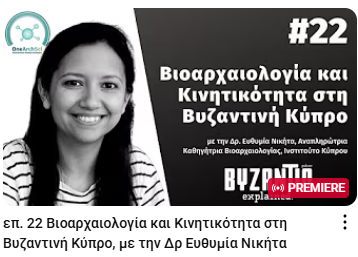
Human mobility and other aspects of life in Byzantine times, with a case study from Nicosia.
In this episode of Byzantium Explained, Dr. Efthymia Nikita, Associate Professor of Bioarchaeology at the Cyprus Institute, discussed human mobility in Byzantine Cyprus. Using the case study of the Hill of Agios Georgios in Nicosia, the episode explored how bioarchaeology and scientific methods help researchers trace population movements and social interactions across the Eastern Mediterranean. The conversation centered on her article, Human mobility in Byzantine Cyprus: A case study from the Hill of Agios Georgios, Nicosia, and highlighted the new insights this research offers into the Byzantine world.
03 July 2025
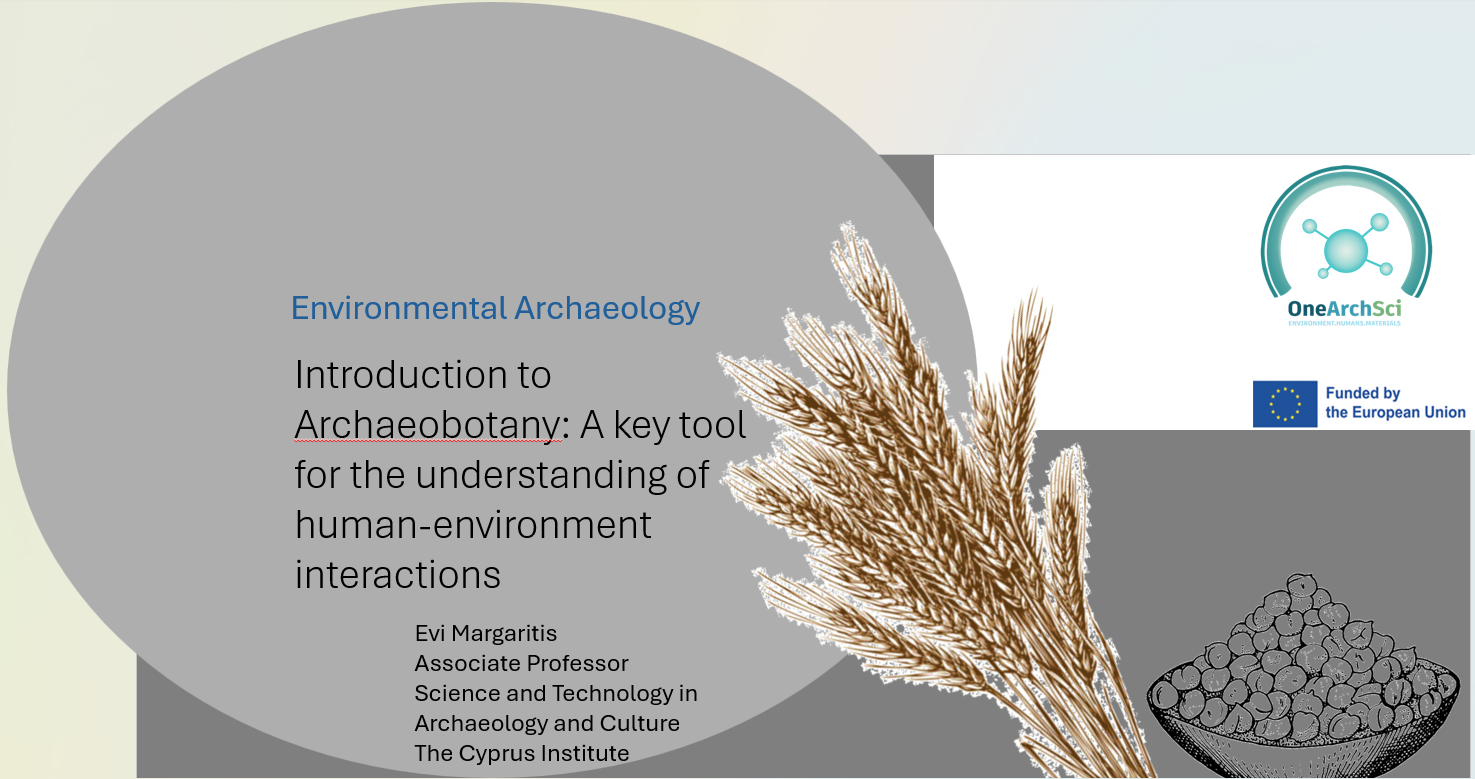
Iklaina Excavations: Lecture to the excavation team
Dr. Margaritis highlighted the importance of archaeobotany as a window into past human–environment relationships, showing how plant remains reveal ancient diets, farming strategies, and environmental change.
The lecture also introduced the excavations team and 60 archaeology students from U.S. universities to the applications of isotope research in the Eastern Mediterranean, demonstrating how isotopic analyses can provide insights into past mobility, diet, and social interactions.
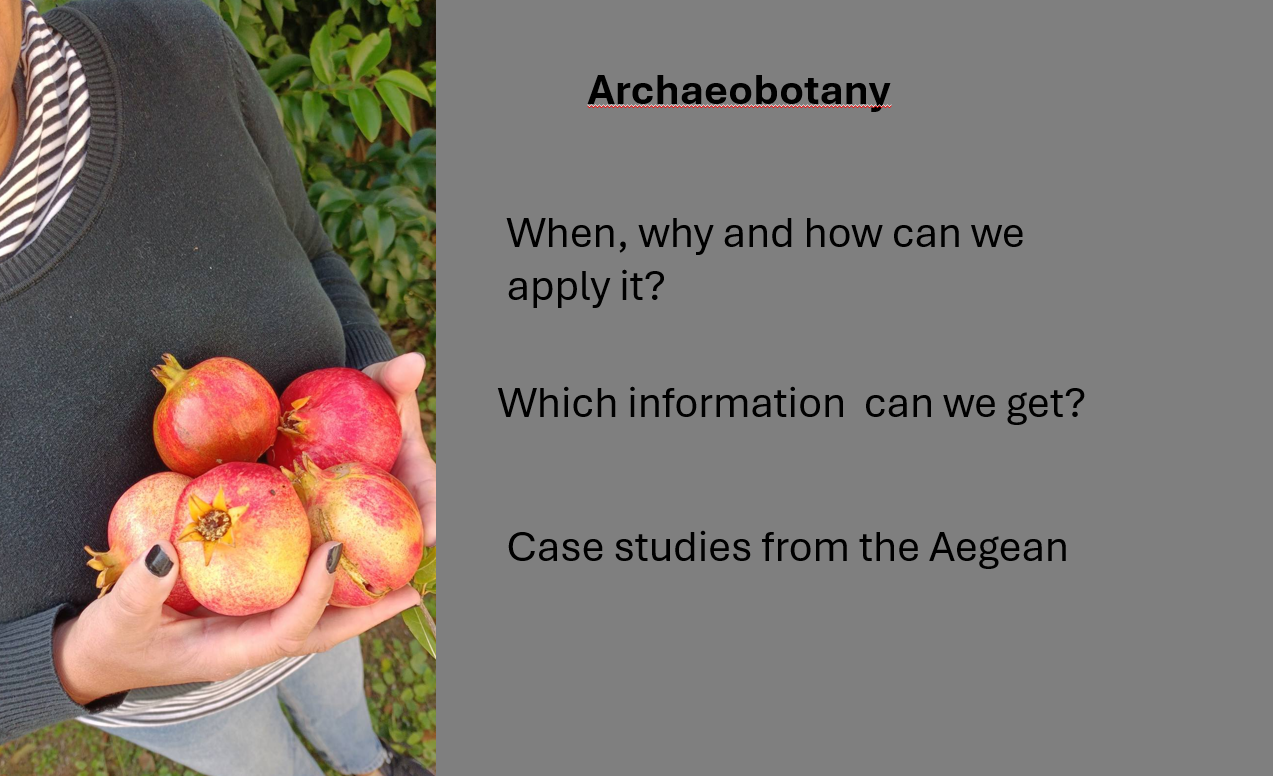
Iklaina excavations lecture
June 2025
Association for Environmental Archaeology
The June 2025 AEA Newsletter (167) featured the OneArchSci ERA Chair project at The Cyprus Institute, supported by Horizon Europe to strengthen archaeological research capacity over five years.
Professor Patrick Degryse, as ERA Chair, will develop expertise in stable and heavy isotope studies, creating new analytical approaches and long-term research and training opportunities
09 April 2025
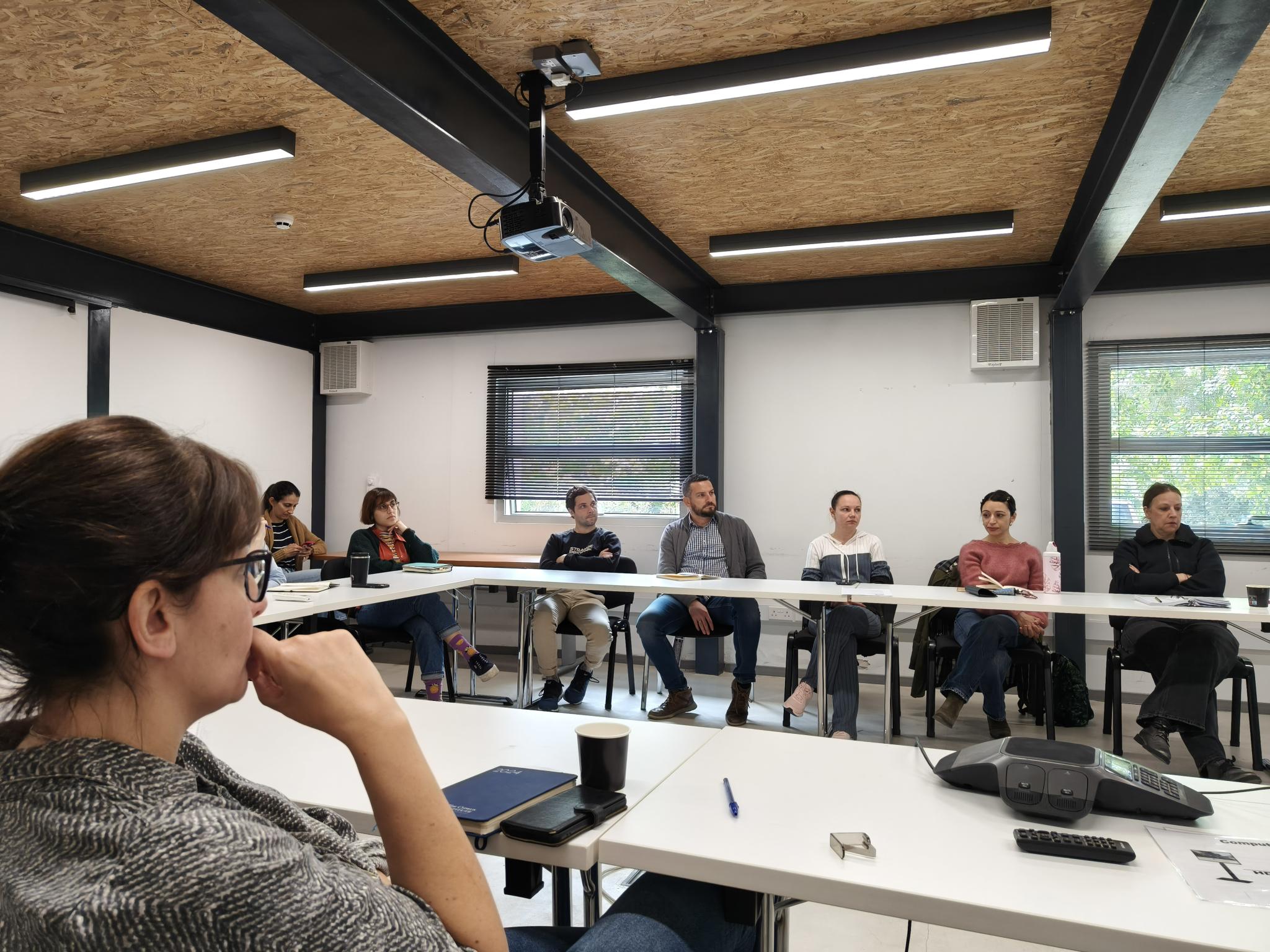
Introducing the OneArchSci to the Archaeological Research Group, STARC
The first all-group meeting of the One Archaeological Science (OAS) ERA Chair project took place on Wednesday, 9 April, from 10:00–12:00 in the STARC Meeting Room. It brought together well over twenty research staff and students from the three CyI archaeological science teams working in Environmental Archaeology, Human Osteoarchaeology, and Archaeological Materials Science, respectively.
The meeting introduced the team leading the project and presented in detail the project’s vision, objectives, and planned activities.
Participants had the opportunity to meet Prof. Patrick Degryse, the inaugural ERA Chair holder, and Dr. Andri Kyriacou, Senior Research Coordination Officer, while also learning about the opportunities the project offers to colleagues at STARC and the wider community in Cyprus.
Professor Degryse stated: “There is great capacity for this research in Cyprus, and with OneArchSci we can bring many stakeholders together to make this happen!”
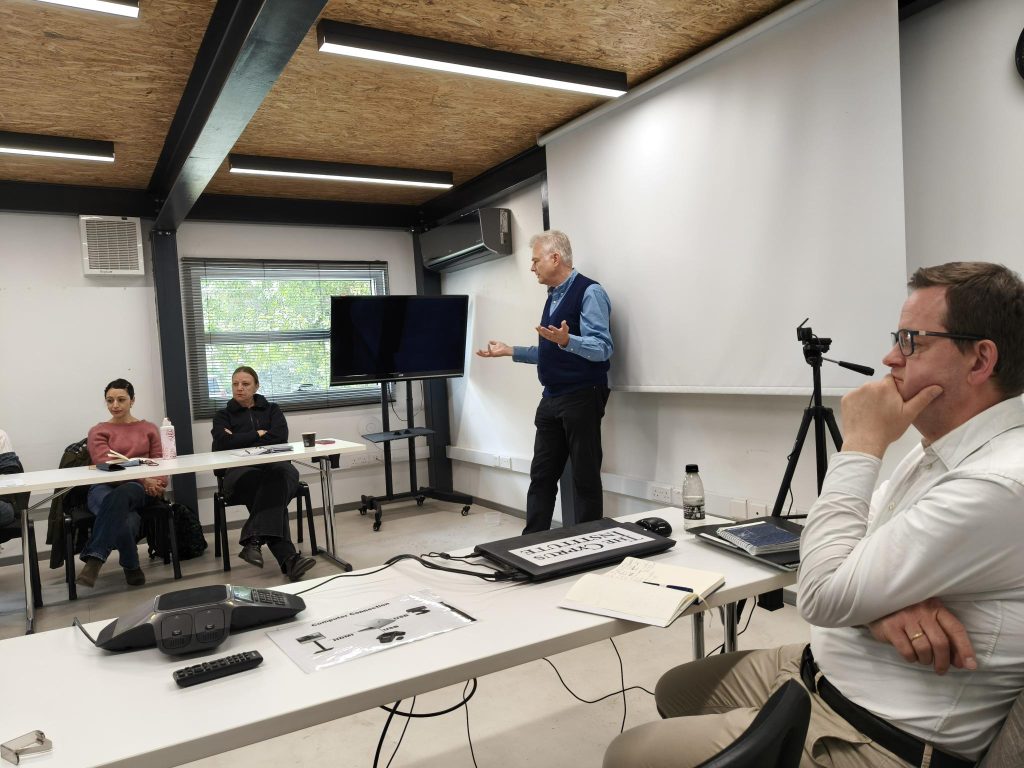
Connecting Minds: Introducing OneArchSci to STARC’s Archaeological Research Group
Professor Rehren briefly outlined the common use of isotope studies in all three branches of archaeological science, and how we will focus on harnessing the power of isotope-based research to enhance our regular practice.
“While we all use different isotopic systems, the principles of their behaviour in the environments we study, the way how they are measured, and the way we can interpret them have much in common across our fields.”, Professor Rehren stated.
Dr Kyriacou will act as the main contact point for the OAS project, both within CyI and to our external contacts and stakeholders. She said: “I’m delighted to serve as the main contact for OneArchSci. My door is always open—please feel free to reach out, ask questions, and collaborate as we move this initiative forward.”
04-05 April 2025
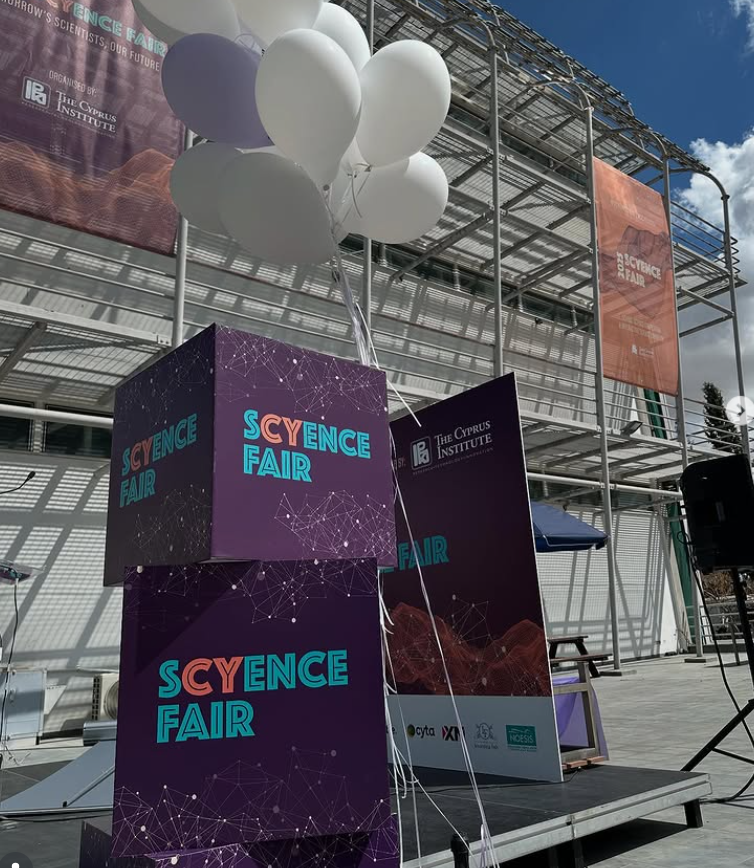
SCYNCE FAIR 2025, The Cyprus Institute
The 6th annual sCYence Fair brought together students, teachers, families, and science enthusiasts for two days of hands-on activities, live demonstrations, and inspiring exhibits celebrating science, creativity, and innovation. The fair aimed to ignite curiosity, nurture innovation, and inspire the next generation of scientists in Cyprus.
During the event, the Archaeological Research Group (STARC) had the opportunity to engage the public and share its work. Visitors learned about bioarchaeology, archaeological science, and the exciting ways the project studies the past. The fair provided a valuable platform to disseminate knowledge, spark curiosity, and connect with the community, demonstrating that science is not only about discovery—it’s about creativity, exploration, and fun.
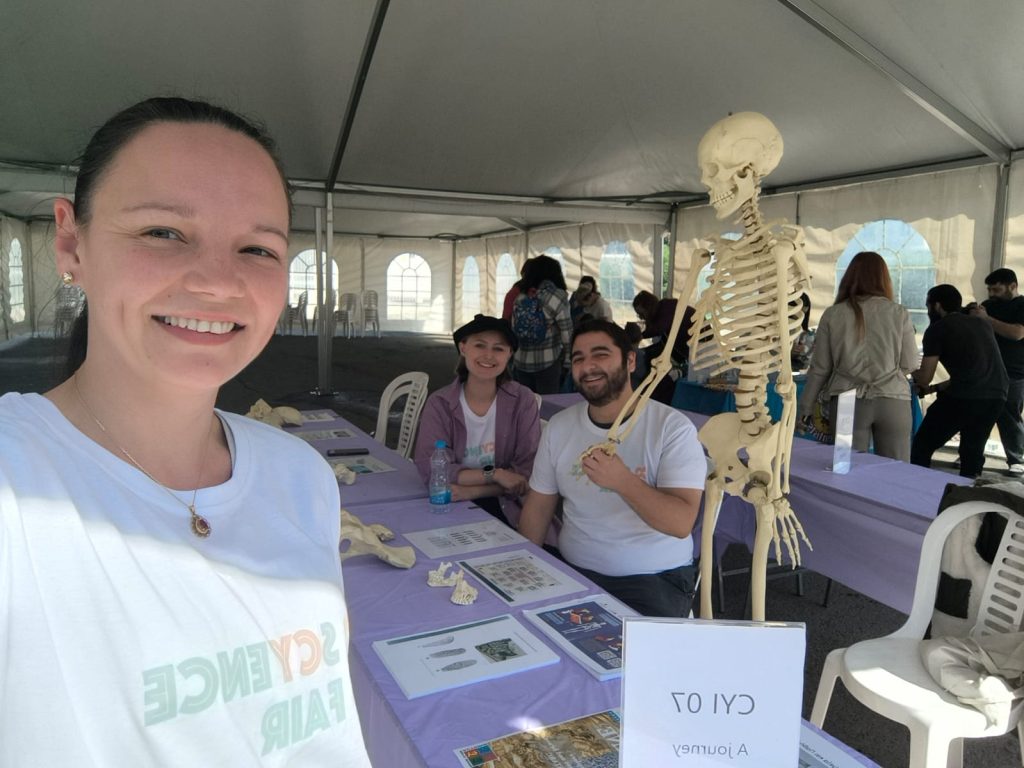
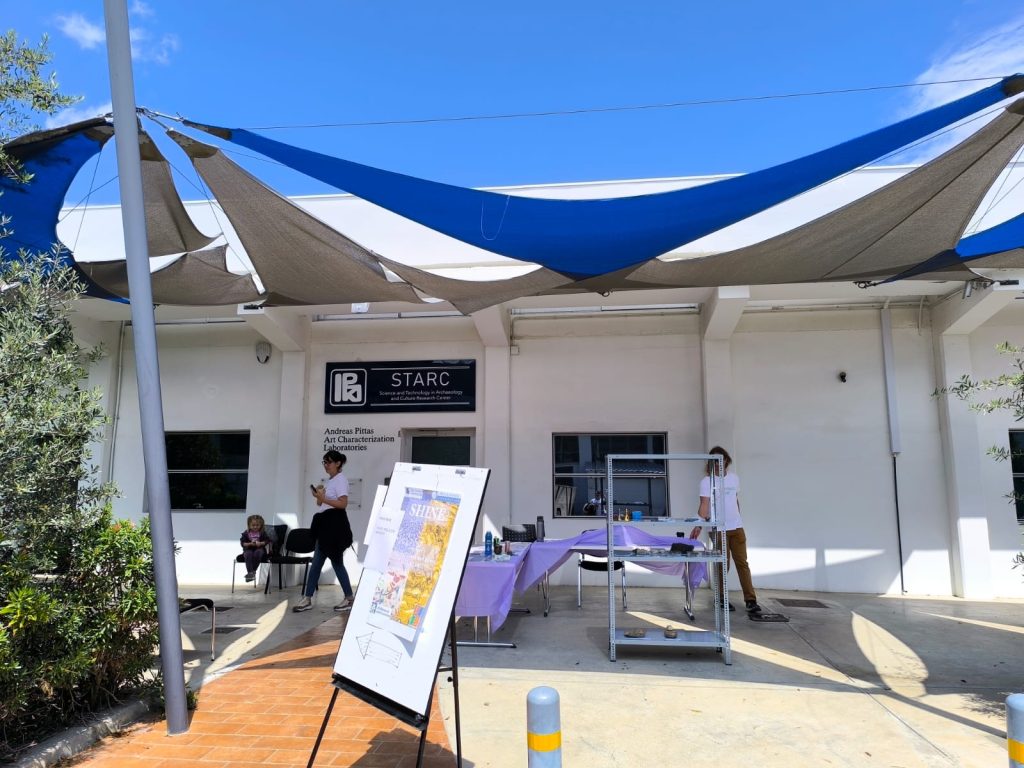
Exploring Bioarchaeology: Hands-On Learning at the Archaeological Materials Booth
The archaeological materials booth offered an engaging introduction to bioarchaeology for children, teachers, parents, and anyone curious about the study of human remains. Visitors had the chance to learn what bioarchaeology is, what researchers study, and the insights that can be gained from examining human bones.
The booth also introduced participants to basic methods for estimating age and sex, providing a hands-on glimpse into the tools and techniques bioarchaeologists use to uncover the stories of past populations.
This interactive experience made bioarchaeology accessible and exciting for audiences of all ages, sparking curiosity about the hidden information our ancestors’ remains can reveal.
Fostering knowledge exchange, building strong inter-sectoral connections, and showcasing how the project advances archaeological science across the region.